
Building your first MVP: what actually matters
An MVP, or Minimum Viable Product is how you turn an idea into momentum. Done well, it creates clarity, traction, and a clear path to revenue.

Executive Summary
- An MVP is the fastest way to move from idea to real traction
- The goal is learning that leads to confident next steps and revenue
- Strong MVPs focus on one problem, one user, and one outcome
- The best MVPs are designed to grow into real products, not be thrown away
Why MVPs exist
An MVP, or Minimum Viable Product, is how you turn an idea into momentum. It is the fastest way to validate a real problem, prove demand, and create a clear path to revenue. A strong MVP is not a prototype or a throwaway build. It is a focused product that delivers one outcome for one user and generates concrete learning you can act on.
A good MVP should help answer questions like:
- Do people clearly recognize this problem
- Does this solution fit into their workflow
- Is there a path to adoption, expansion, or revenue
When MVPs answer these questions early, teams can invest with confidence instead of guesswork.
What an MVP is (and is not)
An MVP is:
- A focused solution to a meaningful problem
- Built to generate learning quickly
- Useful enough that real users rely on it
- Designed as the foundation of a real product
An MVP is not:
- A disposable prototype
- A feature checklist
- A shortcut to growth without effort
The minimum part matters.
The viable part matters more.
Four things that actually matter
1. Start with real signals, not opinions
The strongest MVPs start with evidence.
That evidence often comes from:
- Existing tools people already use
- Workarounds people complain about
- Repeated questions in forums or support threads
- Direct conversations with potential users
You are looking for patterns, not validation.
If you cannot describe the problem clearly in plain language, you are not ready to build.
2. Define the problem before the solution
Most MVPs fail because they are built around features instead of outcomes.
Be explicit:
- Who this is for
- What problem they are trying to solve
- Why current solutions fall short
A strong MVP does one valuable thing well.
Anything that does not directly support that outcome increases cost without increasing learning.
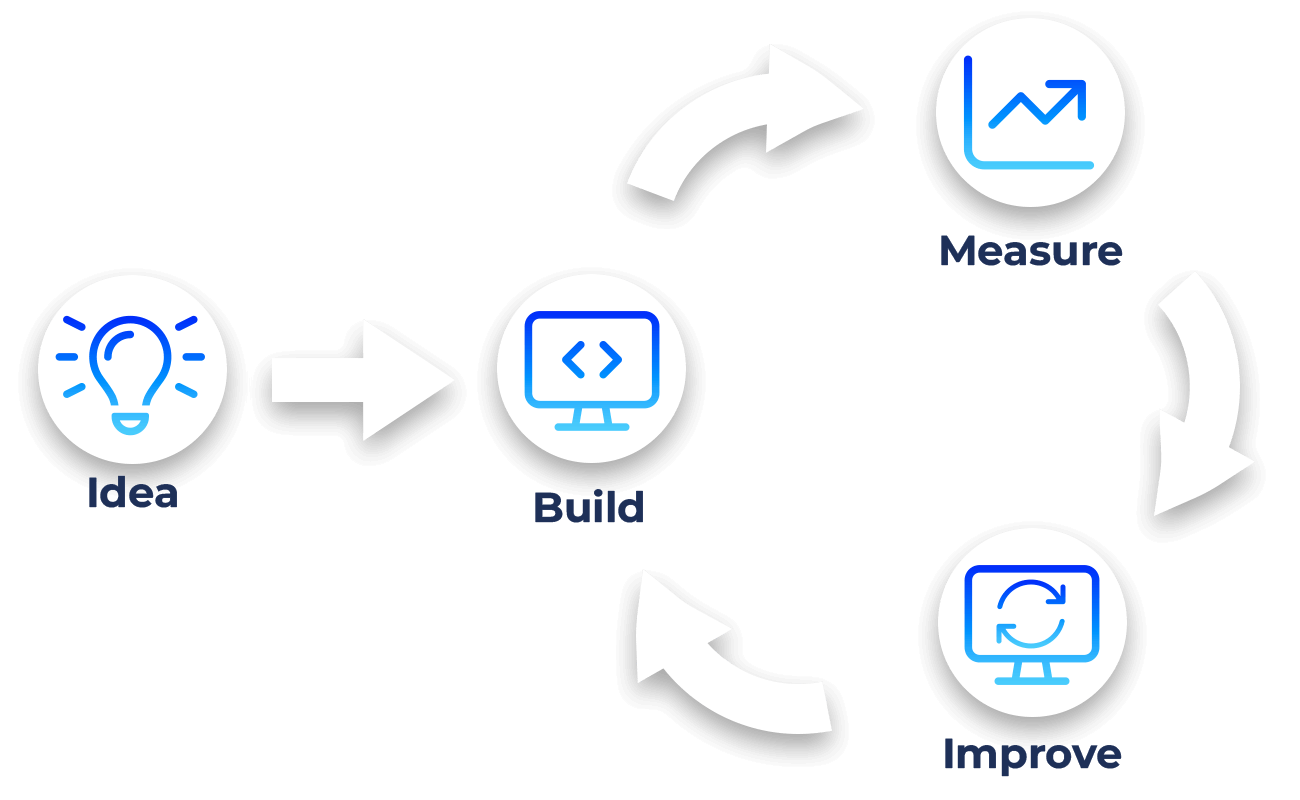
3. Build to learn, then iterate with intent
Speed matters, but direction matters more.
The goal is to get something usable in front of real users so that:
- Assumptions are tested early
- Unknowns become visible
- Tradeoffs can be corrected before they get expensive
Iteration should always answer a question.
Iteration without learning is just motion.
4. Design the MVP with the next phase in mind
An MVP is not the end of the product. It is the beginning.
The most successful MVPs are built so they can:
- Support early customers or internal teams
- Generate meaningful usage data
- Scale without being rebuilt from scratch
This is how MVPs turn into revenue generating products instead of dead ends.
What success looks like
A successful MVP creates clarity and momentum.
That clarity might show:
- The product is ready to scale or sell
- The problem needs to be reframed
- The idea should pause or change direction
All three outcomes protect your investment.
The value is not in being right.
The value is in knowing early.
A practical note from experience
Across startups, internal platforms, and customer facing products, the pattern is consistent.
The hardest part of an MVP is not building the software.
It is making good decisions with limited information.
Technical judgment matters.
Scope discipline matters.
Knowing what not to build matters most.
That is where experienced teams make the difference.
The takeaway
An MVP is how you responsibly invest in growth.
Done well, it helps you learn faster, move forward with confidence, and create a clear path to revenue.
It is not about building less.
It is about building the right thing first.